Research
The Center’s Core Faculty engage in a wide range of empirical and normative scholarship. Examples of current projects include:
Anticipating Personalized Genomic Medicine
Impact and Implications
Principal Investigators: Eric Juengst (UNC), Jennifer Fishman (McGill University), Richard Settersten (Oregon State University)
“Personalized Genomic Medicine” (PGM) has become a banner which unites a very wide array of scientific, clinical, and commercial initiatives, from medical sequencing and pharmacogenomics research to medical school curricula, public health interventions, nutritional regimes, and direct-to-consumer “recreational” genome scanning. Across this spectrum, the virtues of PGM as a goal for translational genomic medicine and a “new paradigm for health care” are interpreted in different ways, with different implications for where this banner leads. In this study, researchers are examining the ways in which five sets of key interpreters understand PGM as a biomedical goal, in order to anticipate the ethical and social challenges they could provoke: individual scientists and labs who invoke the goal in NIH grant applications; the institutional sponsors and public policy proponents of the concept, including patient advocacy groups; PGM’s funding, regulatory, and editorial gatekeepers, medical educators and clinicians already working under this rubric, and the “early adopters” of PGM services amongst consumers and patients. There has been a good bit of discussion of the challenges involved in attempting to roll out PGM within the social context of our health care system. This study is aimed at exploring the challenges that could flow from the intrinsic axiological commitments of PGM itself, i.e. the values that drive and shape the enterprise.
Funding: R01 HG 005277, National Human Genome Research Institute, NIH
ARESA
Advanced Research Ethics Training in South Africa
Principal Investigator: Keymanthri Moodley, University of Stellenbosch, South Africa.
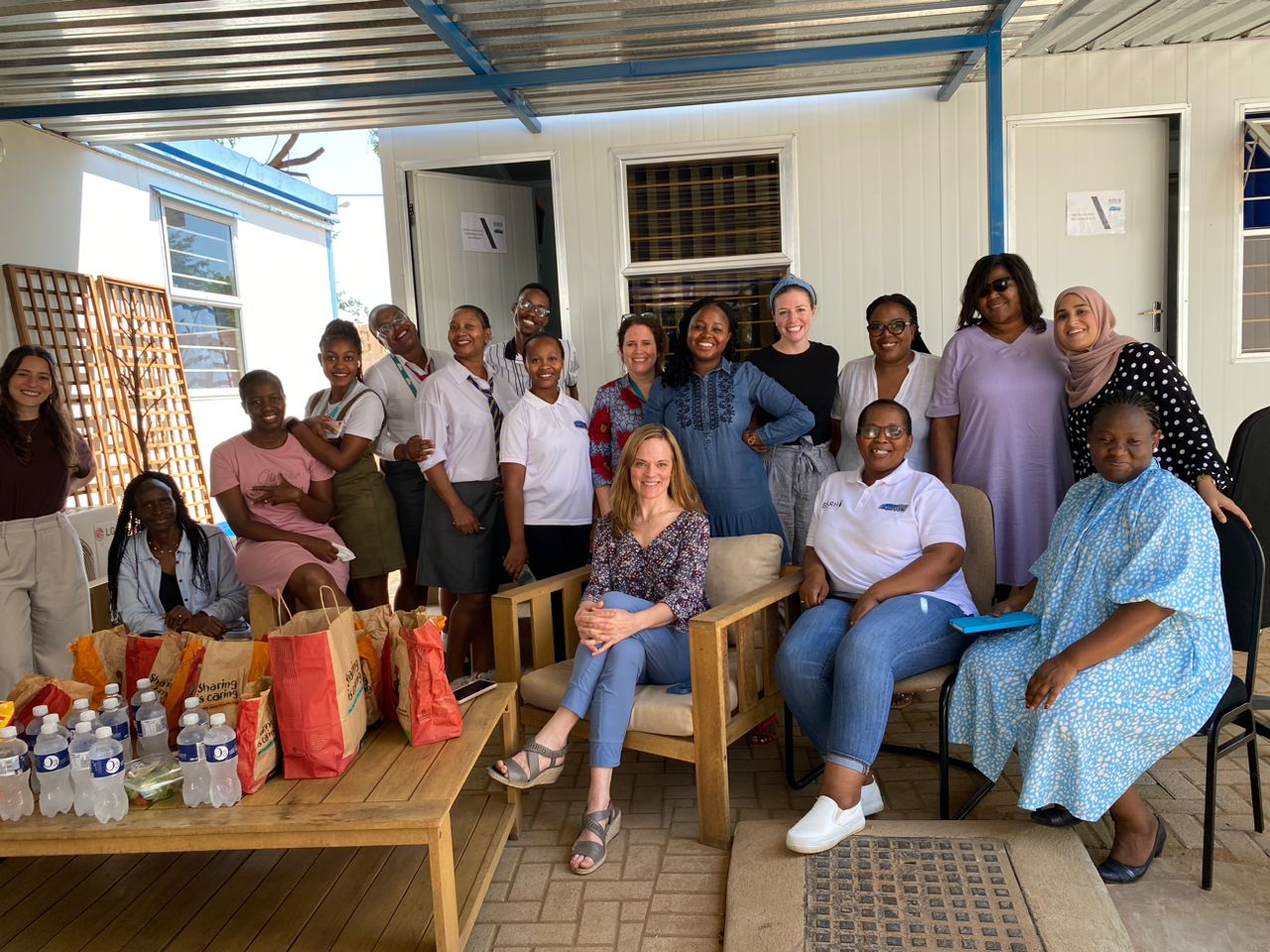
A collaboration between C:B Core Faculty member Stuart Rennie and colleagues at Stellenbosch University in South Africa has been awarded a grant from the Fogarty International Center of NIH to support research ethics education inSouthern Africa. The Advancing Research Ethics training in Southern Africa (ARESA) program will promote responsible research in southern Africa by offering a postgraduate Diploma/Masters level educational program to health care and other professionals in research ethics and by developing a national network for Research Ethics Committee (REC) members. The Bioethics Unit at the University of Stellenbosch, South Africa and the UNC Center for Bioethics will strengthen and expand local and regional African capacity by developing a research ethics curriculum incorporating a broad range of ethical issues across the health research spectrum, including ethics of qualitative research, mental health research, genetic research with indigenous populations, and pediatric research. The curriculum will devote special attention to ethicalissues related to research design and methodology in response to the local needs of local research ethics committees, and reflect health conditions faced by vulnerable populations in Southern Africa by emphasizing the ethical challenges raised by research on infectious diseases (HIV and TB) and emerging chronic diseases. Ten Southern African trainees per year will be selected to participate in 3 two-week intensive and interactive research ethics modules at the University of Stellenbosch Bioethics Unit, be exposed to research ethics committee deliberations, and complete a practicum assignment. To enhance career development, trainees will be individually mentored by ARESA faculty to build capacity in research methodology, manuscript preparation and grant writing, and to develop a package of research training materials to be used at their home institutions. For more information see http://globalbioethics.blogspot.com/
Ethical and social considerations
in “Length of Stay” decision-making
Principal Investigators: Arlene Davis and Michelle Rivkin-Fish
Project Description and Rationale: Obama’s health care reforms highlight a long-standing ethical tension within the American health care system: how to meet the health needs of the poor or underinsured and at the same time control health care costs. In the absence of overarching policy response to this tension, it falls into the hands of hospitals and their staffs to adjudicate on a case by case basis. This study examines the clinical ethical issues this default raises, and the practicalstrategies that clinicians develop to address them. Our goals are to describe the moral distress professionals experience in such cases, the strategies they develop in striving to resolve that distress, and the impacts of these ethical dilemmas and strategies on professionals, patients, and the health care system itself. Finally, we will devise recommendations for clinical ethics practice and hospital policy based on our findings.
This study focuses on length of stay (LOS) monitoring and management, a form of knowledge and practice which involves both medical experts and a special unit of non-physician professionals, the Clinical Care Management (CCM) team. Cases of patients’ extended LOS become a flashpoint for the ethical tension between cost control and uncompensated care when patients’ socio-economic contingencies, rather than medical needs, prevent timely hospital discharge. These patients may have limited options for safe disposition due to poverty, social alienation, or immigration status and the need for continued complex care. Their prolonged hospital stays arouse staff distress and catalyze efforts to find solutions by tapping into hospital, family, community, and societal resources. This study hypothesizes that LOSmonitoring and management reflect an emerging formation of ethical hospitalpractice in the U.S. that expands professional responsibility beyond providing technically competent medical care for the individual to include considerations of cost containment for the good of the hospital and larger society. While LOS per se is rarely categorized as an ‘ethical dilemma,’ and the strategies devised to reduce LOS are rarely the outcome of explicit ethical deliberation, these cases are characterized by pressing anxieties over fairness, entitlement, and duty. We hypothesize that the moral distress aroused by extended LOS reflects a growing dissonance between clinicians’ implicit ideals of distributive justice as related to balancing individual and societal needs, on the one hand, and the logics driving resource allocation currently underway in the hospital and larger society, on the other.
Factors Affecting Healthy Volunteers’ Long-Term Participation in Clinical Trials
Principle Investigator: Jill Fisher
This project investigates healthy volunteers’ patterns of participation in Phase I clinical trials, with particular attention to the differences among minority groups. The majority of healthy volunteers in clinical trials are serial participants, meaning that they enroll repeatedly in studies, so the research has a longitudinal design to understand volunteers’ patterns of participation in clinical trials. The project has four primary aims: (1) Assess how participants’ perceptions of the risks and benefits of Phase I participation change over time; (2) Examine how participants make decisions regarding their participation in clinical trials – including continuing serial participation – and assess the consistency of their choices over time; (3) Document how participants’ self-reported behaviors (a) affect the validity of clinical trials and (b) increase and/or mitigate harm that could come from serial participation, including behaviors that have health benefits; and (4) Compare participants’ perceptions, decisions, and behaviors across racial and ethnic groups. It is critical to understand the patterns of healthy volunteers’ participation in Phase I clinical trials, including differences in the participation of minority groups in these early-phase studies. Through this knowledge, efforts can be made to better protect the health of participants as well as to improve their understanding of the risks of serial participation in clinical trials. In addition, this project can help identify factors associated with serial participation that could affect the validity of clinical trials and potentially threaten the public’s health.
Funding: R01 GM099952, National Institute of General Medical Sciences, NIH
Second Wave Initiative
Principal Investigators: Anne Lyerly, Ruth Faden (Johns Hopkins U.), Margaret Little (Georgetown U.)
Each year, hundreds of thousands of pregnant women in the US face significant medical illness during their pregnancies, and many more do so worldwide. Diabetes and hypertension complicate 40,000+ pregnancies; psychiatric illness complicates an estimated 500,000; cancer and autoimmune diseases are not uncommon. Yet we have surprisingly little data about how to safely and effectively treat these conditions. The costs of ignorance are significant: the pregnant body can substantially change the ways in which drugs are metabolized; concerns about the safety of taking medication must be balanced against the medical risks — to woman and fetus alike — of undertreating significant medical disease. Without information to guide these decisions, pregnant women and the children they bear face risks of under-treatement, ineffective treatment, and short-and long term health consequences.
Three years ago, Anne Lyerly partnered with Ruth Faden (Johns Hopkins Berman Institute of Bioethics) and Maggie Little (Georgetown Kennedy Institute for Ethics) to move forward responsible inclusion of pregnant women in research. The Second Wave Initiative, launched in 2009, is a collaborative academic effort to advocate for, and help find, ethically and scientifically responsible solutions for increasing our knowledge base for the treatment of pregnant women who face medical illness. In April of 2009, scholars from Georgetown, Johns Hopkins, and Duke held a two-day workshop to make progress in this challenging area. Participation included leaders from the NIH, FDA, aswell as from leading academic medical centers. Supported by a Reflective Engagement grant from Georgetown, the outcome of the workshop identified barriers, articulated the costs of ignorance, and proposed consensus proposals that can immediately begin to make a difference in pregnant women’s health. Second Wave advocates have also worked over the summer with Members of Congress and their staffs to raise awareness of the issue. Those efforts resulted ininclusion of language in the House Committee Report accompanying the Fiscal 2010 Appropriations for the Departments of Labor, Health and Human Services and Education. Their research and scholarship in the area are ongoing, with empirical studies aimed at understanding what matters to pregnant women considering enrollment in studies, and conceptual work to help guide responsible research with pregnant women in the future. For more information: http://secondwaveinitiative.org.
Virtue Ethics and Animal Research
The aim of this project is to develop a virtue ethical approach to biomedical animal research science. A virtue ethical approach to animal research has not yet been developed but the promise of this framework in addressing ethical issues arising within the practice of animal research is significant. In addition, philosophers writing on ethical issues in animal research rarely engage with animal researchers or inform their work by considering the practices of animal research as a science, but for any investigation of the moral and intellectual virtues of science, such engagement is crucial.
The literature on virtue ethical approaches to practical moral problems is growing (Walker and Ivanhoe 2009). However, while there is limited literature regarding virtue ethical approaches to our treatment of non-human animals in general (Walker 2009), there is no available developed virtue ethical approach to the use of animals in scientific research. This deficit is not surprising given the relatively recent turn of virtue ethicists to consideration of specific practical moral problems in contemporary society. Yet it needs to be rectified since a virtue ethical approach to animal research promises a key advantage over current philosophical approaches. Current approaches regarding questions of animal rights or expected utility tend to focus on whether or when biomedical research using non-human animals is morally justified. In contrast, a virtue ethical approach to animal research is well suited to address ethical issuesinternal to the practices of animal research. These practices would specifically address the care and use of animals in a research setting, including the bonds and special obligations of researchers to animal subjects; the science norms of laboratory research as they contribute to the development of specific virtues or vices; and the impact of animal care and use on researcher and animal well being or flourishing.
The second innovative cornerstone of this project is collaboration with animal researchers to understand, frame, and address the ethical issues internal to biomedical animal research science. With a few notable exceptions, there is little interaction between philosophers working on ethical issues related to animals and those engaged in various practices involving the use and care of animals. This lack of interaction makes sense given philosophers’ focus on questions of general moral justification regarding animal use, however, it is impossible to adequately interpret or address the ethical issues internal to animal research without understanding the culture and practices of laboratory animal science. Examples of questions that tap issues internal to the practices of animal research include:
- Which virtues or vices are most salient in this setting? How are they recognized, understood, and promoted (for virtue) or discouraged (for vice)?
- What aspects of animal use in research generate concerns for human flourishing or promote flourishing?
- How is animal flourishing understood and promoted when animals are engineered for specific types of research?
- To what extent does a virtue ethics approach to the ethical issues internal to animal research fit with the norms and practices of the science of animal research?
Examining the “E” in “ELSI”
Methods, Understandings, and Aims of Ethics
in the ELSI Literature and Community
Project Director: Rebecca Walker
Former UNC CEER Trainee and current co-author on the project: Clair Morrissey
Investigation into the ethical, legal, and social implications (ELSI) of human genomics is a robust and growing field of interest to a cross-disciplinary and diverse community of researchers and scholars. However, ELSI work is very young relative to ethics (and law and social science) generally and even relative to its closest neighboring field, bioethics, and has focused relatively less on “meta” questions of method, aim, and understanding of the various approaches to ELSI work. The “E in ELSI” project aims, first, to offer a qualitatively rich and empirically accurate portrayal of the aims, methods, and understandings of ethics within the field of ELSI research and, second, to use this portrayal as a backdrop for normative analyses of the incorporation of ethics into ELSI as well as a platform for moving the field forward through engagement with colleagues regarding our findings and discussions about implications for the field. To date, we have completed two empirical studies looking at ELSI literature in the five-year period following the completion of the Human Genome Project (2003-2008). The first study investigated methods and aims of ethics within a random sample of ELSI literature from this period as well as identifying frameworks for research at the intersection of ethics and human genomics/genetics. The second study looked at the entire five-year period and investigated funding sources, first author disciplinary backgrounds, and placement of the publications as well as categorizing each publication according to the frameworks developed in the first study. Presentations of this work were given at the 2011 ELSI Congress in Chapel Hill and we also convened an “E in ELSI Workshop” at the Congress designed to begin engagement with our colleagues in discussion of how to move the field forward. Immediate next steps for the project involve dissemination of our findings through publications designed to spur productive dialogue about the state of ELSI ethics.
This work is taking place as part of the UNC Center for Genomics and Society, CEER Grant.